Pet name generators
How to Use a Cat Name Generator to Find the Perfect Name for Your Cat
The shelter volunteer hands you the paperwork, the cat carrier clicks shut, and somewhere between the car park and your front door it dawns on you: this animal has no name. Two days later, the...
The shelter volunteer hands you the paperwork, the cat carrier clicks shut, and somewhere between the car park and your front door it dawns on you: this animal has no name. Two days later, the scratch post is set up, the food bowl is in place, and the cat is still “the cat”—because every name you suggest either sounds wrong out loud or was already given to your childhood neighbour’s tabby. Naming paralysis is real, and it is the reason a cat name generator exists.
Used well, a generator is not a slot machine that spits out random words. It is a way to break the mental loop of recycling the same ten ideas by filtering names through things that actually matter to you: your cat’s colour, its personality, the sound of a name called across a kitchen, and—the part most sites skip—what each name genuinely means and where it came from. A name like Luna sounds lovely, but knowing it comes from the Latin for “moon” tells you whether it still suits a cat who has never once looked up at the night sky.
This guide walks through how to use a cat name generator properly: how to set your filters, how to shortlist without second-guessing yourself into exhaustion, and how to test a finalist before it sticks. The goal is simple—by the end, you should have one name that feels inevitable rather than improvised, and the confidence that its meaning and origin have been checked rather than guessed.
Why a Cat Name Generator Beats Brainstorming Alone
You have just brought home a quiet tabby who spends her first evening under the sofa, and the family is gathered around the kitchen table offering suggestions that all sound like the name of the cat they had as children. Nobody agrees, and after twenty minutes every idea starts to blur into the last one. This is exactly where a cat name generator earns its place — not as a replacement for your own judgment, but as a way out of that stalemate.
Overcoming the ‘blank page’ problem when naming a new pet
Brainstorming alone tends to recycle the same dozen names — Felix, Bella, Oscar — because our memory reaches for whatever we have heard most often. A generator widens the field instantly, which matters when naming a rescue whose personality has not yet revealed itself. A practical tip: run the generator several times, note the five names that make you smile, and test each one aloud for a few days. Cats respond to sound and rhythm more than meaning, so a name that is easy to call across a garden will serve you better than one that merely looks clever written down.
How generators spark ideas you’d never think of yourself
The real value is lateral thinking. A generator pairs sounds and origins you would not naturally combine, nudging you toward names you would never have reached from a blank page. For example:
- Sable — a deep black-brown colour, borrowed from the fur trade; Slavic origin, ideal for a dark-coated cat.
- Miso — Japanese fermented soybean paste; warm, savoury, and unexpectedly fitting for a marmalade kitten.
- Freya — the Norse goddess associated with love, whose chariot was drawn by cats — a name with genuine history behind it.
Each suggestion carries a verified meaning and language of origin, so you are choosing substance rather than a pretty sound. Treat the generator as the first draft and your instincts as the editor — browse our black cat names or the full cat names hub to refine the shortlist it gives you.
Step 1: Choose the Right Generator for Your Cat
Picture the scene: a rescue cat has just settled onto your sofa, and the shelter paperwork still says "Cat A". Type "cat names" into a search engine and you'll find hundreds of tools — some genuinely useful, some that spit out the same ten names regardless of what you enter. The first step is picking a cat name generator that actually fits your situation.
General Cat Name Generators vs. Niche Tools
Broad generators cast a wide net: click a button, get a random name, repeat until something clicks. They work well when you want variety and have no fixed theme in mind. Niche tools are more focused:
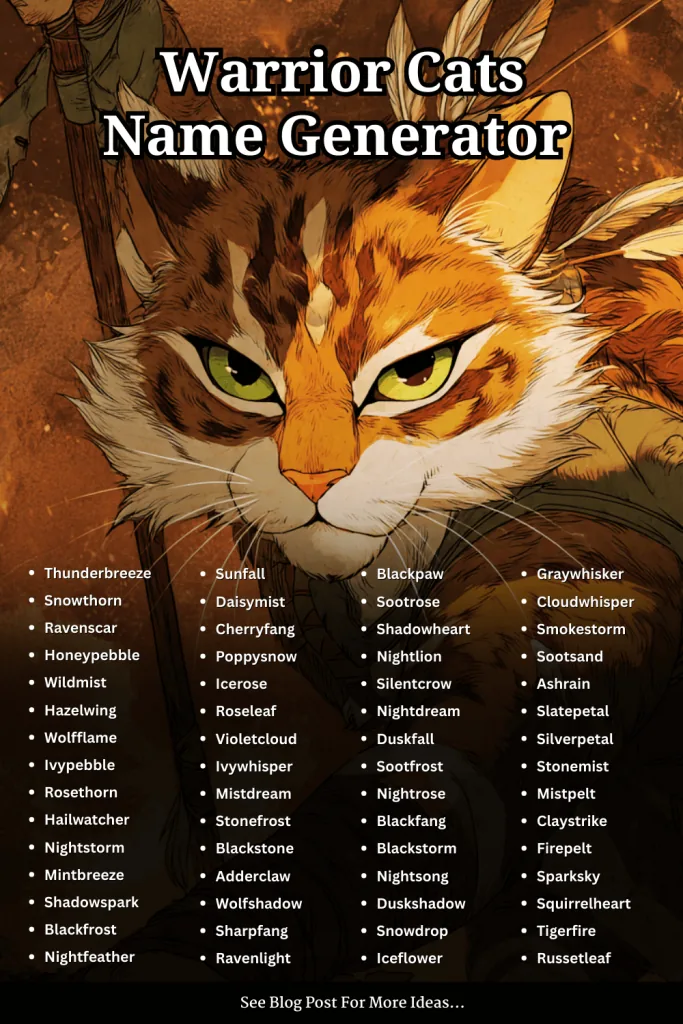
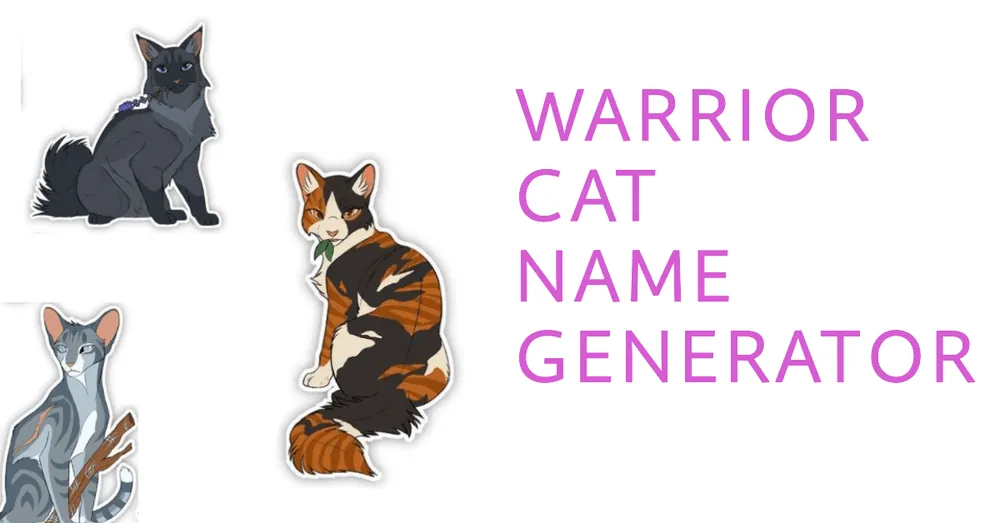
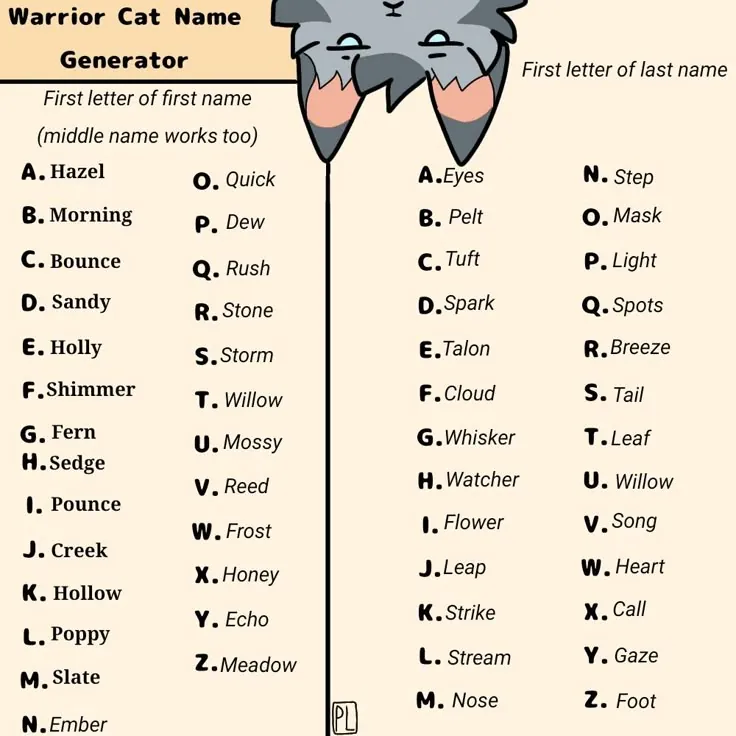
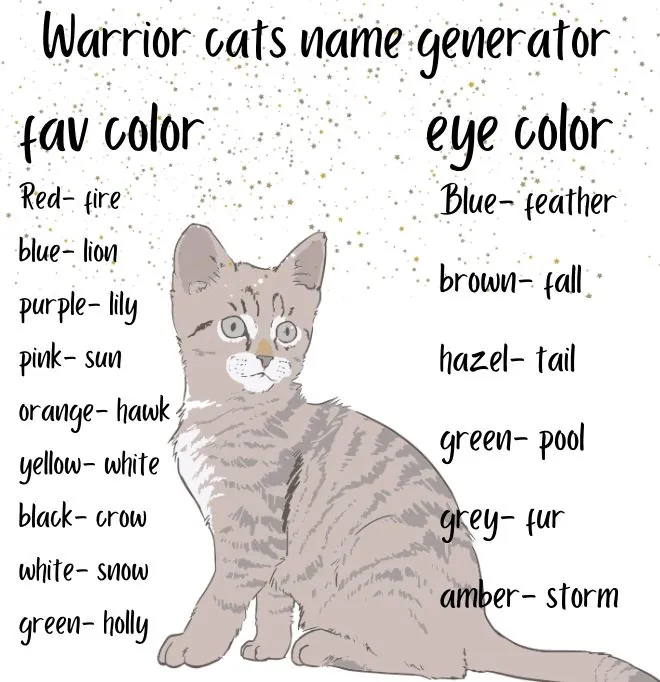
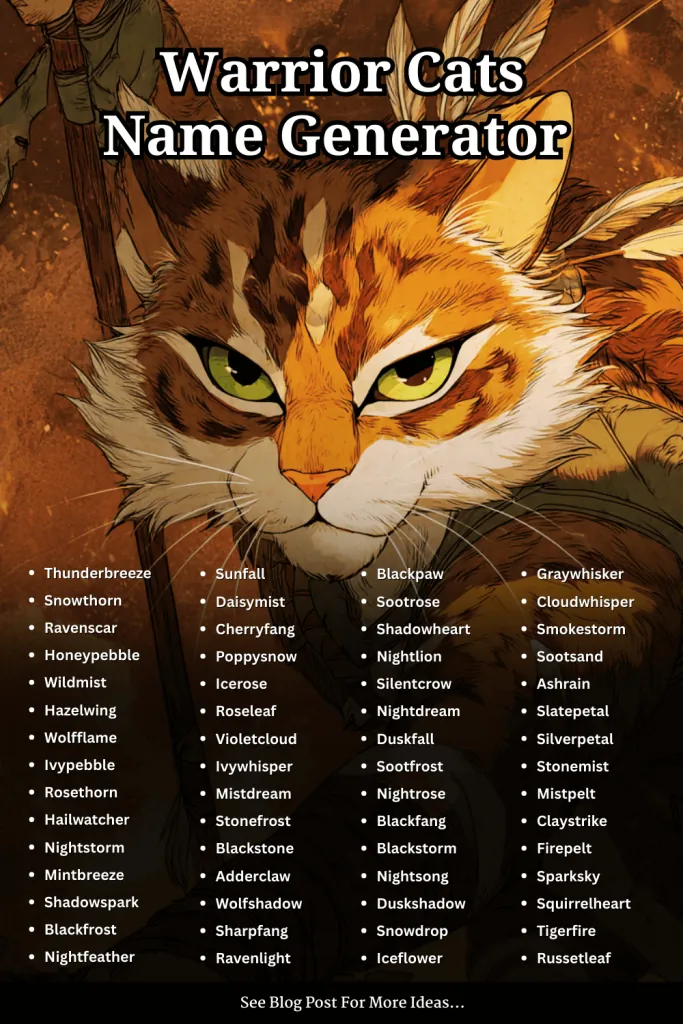
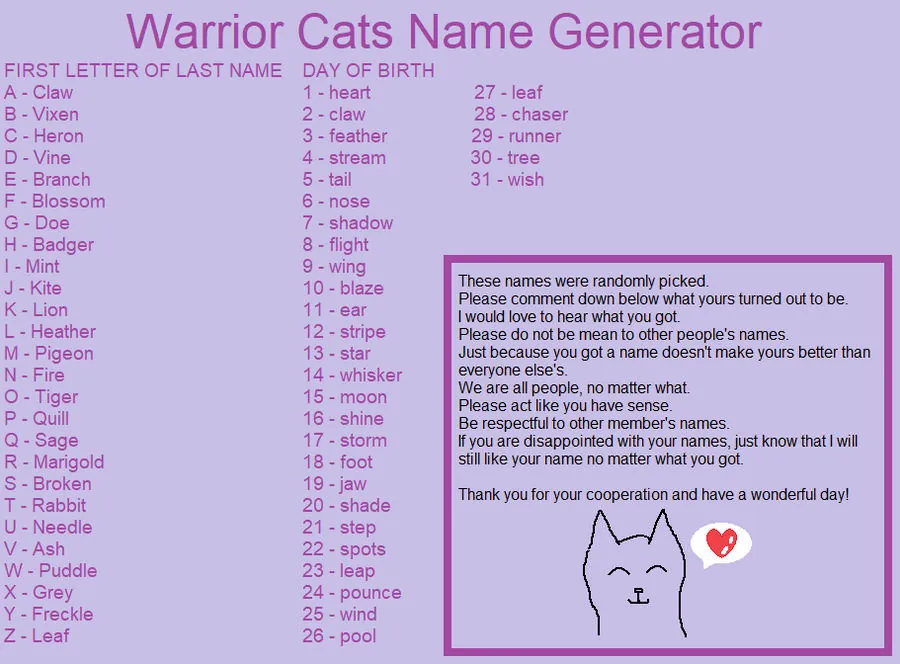
- Warrior Cats generators build clan-style names from prefixes and suffixes — ideal if you enjoy that naming system, though the results read as fantasy rather than everyday names.
- Breed-specific filters suggest names suited to a cat's appearance or heritage — a Siamese might suit a Thai-origin name, for example.
- Funny or traditional filters let you skew towards puns or classics, which matters when a second cat needs a name that pairs with your first (Biscuit and Gravy, say).
A practical tip: use a niche tool for direction, then verify the name's actual meaning before committing — that's where a reference site such as PawNamer's cat name guide earns its keep.
What to Look For: AI Personalisation, Trait Inputs, and Free Access
Not all generators are built the same. Before settling on one, check three things:
- Trait inputs. The better tools ask about coat colour, personality, or gender, so a ginger loaf of a cat doesn't get suggested "Shadow".
- Personalisation. Some newer generators adapt results based on names you've already saved or rejected — closer to a shortlist builder than a slot machine.
- Free access. Most of these resources cost nothing, but watch for tools that hide full name lists behind a paywall or require sign-up before showing more than a handful of results.
The analogy worth keeping in mind: a generator is a shortlist machine, not a decision-maker. It narrows hundreds of options to a dozen candidates; the final choice still belongs to the person the cat will ignore when called.
Step 2: Gather Your Cat's Details Before You Generate
The rescue centre hands over a form; the vet asks for a name on the records; and suddenly a cat who has been yours for two days needs a permanent identity. A name generator works far better when it has real details to work with — the same way a tailor needs measurements rather than a guess. Spending five minutes gathering those details now saves hours of scrolling later.
Personality, coat colour, breed, and gender as naming inputs
Four details shape almost every good cat name, and each one narrows the field usefully:
- Personality: a cat who supervises every chore suits a dignified name like Reggie; a cat who hides under the sofa may suit something softer.
- Coat colour: colour is the quickest visual cue — a grey cat invites smoky or silvery names, a ginger cat invites warm ones.
- Breed: a Siamese or a Maine Coon carries heritage, so names drawn from its region of origin often fit naturally.
- Gender: useful, though not a rule — plenty of owners happily cross traditional lines.
A practical tip: jot down two or three words describing your cat the way a friend would describe them, and feed those words into the generator as prompts.
Names that fit kittens vs. adult or adopted cats
A kitten grows into the name, so choose one that still sounds right at four years old. Pixel suits an eight-week-old ball of energy — but imagine calling it across a garden in a decade. Names that age well tend to be one or two syllables with a clear vowel sound.
For adopted or rescued cats, there is a second consideration: an adult cat may already answer to a name from its previous life. Keeping that name — or choosing something that shares its first sound — eases the transition and respects the cat's history. If the old name is unknown or unpleasant, pick something entirely fresh rather than a variation that muddles the old one.
Our cat name generator lets you filter by age and background, so a rescue's story can shape the shortlist rather than complicate it. Pair the results with your gathered details and you will have a short, personal list instead of a random pile of suggestions.
Step 3: Generate, Filter, and Shortlist
The hardest moment for most new owners is the same: a decent generator spits out fifty suggestions, and none of them feel right. That is normal — the first round is raw material, not the answer. Treat generation like baking batches of biscuits: you sample, adjust the recipe, and try again.
How to run multiple rounds and mix results (prefix + suffix combos)
One session with the generator rarely lands the winner. Run it three or four times, changing the inputs each round: once for a personality trait, once for the cat's colour, once for a place you love. Then mix the halves of two good candidates into fresh names — this trick turns "good-ish" results into genuinely original ones.
- Prefix swap: keep the ending — "Oliver" and "Sylvie" produce "Sylver".
- Suffix swap: keep the beginning — "Biscuit" and "Pepper" become "Pepperpot".
- Cross-round blends: take one round's first syllable and another round's second for names nobody else will have.
Write every keeper down between rounds. Memory loses names faster than filters do.
Narrowing 50 names down to a top 3
The vet-receptionist test is the classic shortlisting method: imagine calling each candidate across a waiting room. Names that are embarrassing to shout, or hard to distinguish from family members' names, fall out quickly. Our naming guide suggests a three-stage filter:
- Sound check: two syllables and clear consonants are easiest for cats to recognise.
- Meaning check: look up each name's origin — a name that means "moonlight" earns its place; one with an unclear or awkward meaning does not.
- Use test: say it aloud in a full sentence, ten times.
Rate survivors out of five, keep the top three for a week, and see which one you actually use. The name you reach for naturally is the one.
How to Test a Cat Name Before You Commit
A rescue cat might carry a shelter name like "Tiger" for months before anyone questions it — then the owner discovers the neighbours already shout an identical-sounding name for their dog, and poor Tiger comes running to the wrong house. Testing a name before the paperwork feels final saves exactly this kind of confusion. A cat name generator can shortlist dozens of candidates, but only real-world trials reveal which one truly sticks.
Say-it-out-loud and vet-recall tests
The first test costs nothing: say the name aloud, repeatedly, in the tone a person actually uses when calling a cat in from the garden. Names that look charming on paper can collapse in speech — long ones get clipped ("Bartholomew" becomes "Bart" within a week), and rhyming names cause chaos in multi-cat homes.
- The recall test: imagine standing at the back door calling it. If it feels awkward after three tries, it will feel worse after three years.
- The vet-waiting-room test: picture announcing the name to a waiting room. If it would feel embarrassing, that feeling rarely fades.
- The household test: every family member says it once. If pronunciations differ, the cat ends up with two names and answers to neither reliably.
Watching how your cat responds to different sounds
Cats discriminate between human voices, so sound matters more than sentiment. Names ending in a bright, high vowel — think "Milo" or "Kiki" — tend to cut through household noise better than muffled consonant clusters. A practical tip: call each shortlisted name from another room and watch. Ear twitches, a head turn, or an approaching tail all count as positive signals; complete indifference over several days suggests the sound isn't landing.
Give each finalist a two-day trial, one name at a time, and keep notes. Most cats reveal a clear favourite within a week. For owners still narrowing the field, a cat name generator paired with our guide to meaningful cat names by origin makes it easier to shortlist candidates worth testing — and to recognise the etymology behind a name before it becomes part of daily life.
Popular Cat Name Themes and Ideas to Try
Most owners have stood in front of a new cat, food bowl in hand, and realised the blank form at the vet still says "Kitten". The fastest way out of that stall is picking a theme. A theme narrows thousands of options to a shortlist that actually suits your cat — and a good method works the same way, filtering by meaning and origin rather than throwing out random sounds.
Food names, mythology, pop culture, and classic human names
These four themes cover most cats in British homes. Food names suit round, cosy cats; mythology suits dramatic personalities; pop culture and human names suit cats who act like small people. Each name below carries a verified meaning:
- Mochi · Pounded sticky rice cake, soft and sweet · Japanese
- Clementine · From Latin "clemens", meaning mild or merciful · Latin
- Basil · From Greek "basileus", meaning king · Greek
- Freya · Norse goddess of love and beauty · Old Norse
- Thor · Thunder; the Norse god of storms · Old Norse
- Archie · Short for Archibald, "genuinely bold" · Germanic
- Oscar · Possibly "deer friend" or "god's spear" — sources disagree · Old Irish
A practical tip: say the name out loud across a room. Two syllables ending in a vowel carry better than long names, which is why Freya travels further than Clementine, however charming it looks on paper.
Fierce and fantasy names for Warrior Cats fans
Adopters who grew up with the Warrior Cats books often want a name with claws in it — especially for a rescue who has clearly survived something. These strong names work both in fiction fandom and real vet waiting rooms:
- Blaze · From Old English "blæse", a bright flame · Old English
- Storm · Old English "storm", a violent weather event · Old English
- Shadow · From Old English "sceadu", shade or darkness · Old English
- Sable · The black-furred marten; dark and sleek · Slavic
If you want more options in this vein, browse our full archive of warrior cat names, or use a version filtered to "fierce" meanings. For a calmer mood, our mythological cat names guide pairs well with the list above.
Common Naming Mistakes to Avoid
A couple in Leeds once adopted a quiet rescue tabby and named him Simon — only to realise weeks later that "Simon" sounded almost identical to "Come on", the phrase they used most often at the front door. The cat ignored both. Small oversights like this are easy to make, and good advice can only help if you know which pitfalls to sidestep first.
Names too similar to commands or family members' names
Cats learn their names through sound patterns, so names that echo everyday words confuse them. Before committing, say the name aloud around the house for a day. Watch for these clashes:
- Command sound-alikes: "Kit" vs "sit", "Bo" vs "no", or "Stay" as an actual name.
- Family member overlap: Naming a cat after a partner, child, or housemate who is frequently called can cause muddled responses for everyone — including the cat.
- Existing pet confusion: Milo and Miles, or Bella and Belle, will have both animals second-guessing who is being addressed.
Choosing a name your cat will outgrow
Kittens invite cute, diminutive names — Peanut, Biscuit, Tiny — but that fluffy six-week-old may become a substantial seventeen-year companion. A name like Tiny on a six-kilo tom can feel odd within a year. Practical tips:
- Choose a name that suits an adult cat, with a nickname as a fallback (Theodora → Theo → Ted).
- Test the name's "calling voice": something you can comfortably shout across a garden at night.
- For rescues, keep their previous name if they respond to it — or browse our verified-meaning lists on the cat names hub for alternatives.
FAQ: Cat Name Generator Questions Answered
Picture the moment: a rescue cat has just settled onto your sofa, and you have typed "cat name" into a search bar more times than you care to admit. A tool like this can break that deadlock, but most owners have fair questions before trusting one with such a permanent decision. Below, the PawNamer editorial team answers the two we hear most often.
Are AI name generators really free and unique?
Most are genuinely free to use, because generators exist to attract readers to the surrounding name library. The more honest question is about uniqueness. A generator combines name elements or themes at random, so its raw output is rarely rare — a suggestion like "Luna" or "Milo" will occur to thousands of owners on the same day.
What a good tool does offer is starting points, not finished names. Treat the results the way you would treat a friend's suggestions: shortlist three or four, then check each one's meaning and origin before committing. On PawNamer, every generated idea links to a verified entry, so you can see whether Clementine truly derives from the Latin for "mild" rather than from a cartoon character. A practical tip: run the generator twice with different moods — once playful, once classic — and see which list your household keeps quoting.
Can I use a generator name for show cats or registration?
You can usually use it, with caveats. Pedigree registries such as GCCF and TICA allow breeders to choose most names freely, provided they meet length limits, avoid banned words, and — for cattery prefixes — follow naming conventions. A generator cannot check those rules for you, so always confirm against the registry's current requirements before submitting paperwork.
Keep in mind that registered show names and everyday names often differ. A show cat might be registered as Winterbourne Aster while answering to "Aster" at home. Use the generator for the friendly, daily-call name, and build the formal prefix separately.
- Generators are free; uniqueness is your job to verify.
- Check registry rules for length and cattery prefixes.
- Shortlist, then verify meanings before deciding.
For verified meanings behind any suggestion, browse our cat names A–Z library.
The Bottom Line
A cat sitting on the kitchen counter, a name half-chosen and half-abandoned — most owners know that moment well. The method is useful precisely there: it shakes loose the obvious choices and hands over options you might never have considered, from classical names with centuries of history to the everyday favourites that suit a rescue cat who has already lived a life before you. Used well, it shortens the search without deciding for you.
That said, it depends entirely on your situation. If you have adopted a cat whose personality is still unfolding, a generator gives you a broad starting pool and time to observe. If you already know your cat well — a second pet, a clear character in the house — your instincts may beat any algorithm. Treat the generator as a companion to your own judgement, not a replacement for it, and the right name will usually announce itself.
References
- Warrior Cat Name Generator - Powered by AI (namegen.com)
- Cat Name Generator - Random Unique & Funny Cat Name Ideas (nerdburglars.net)
- Felines4Us — Cats, Kittens, and Cat Breeders (felines4us.com)
- Best Cat Name Generator Female | Vondy (vondy.com)
- "Cat Name Generator" Quizzes | Quotev (quotev.com)